
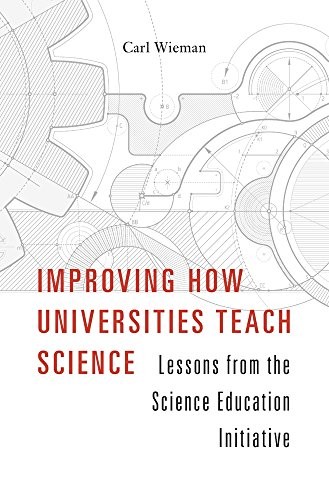
Improving How Universities Teach Science: Lessons from the Science Education Initiative
Carl Wieman
Harvard University Press
- Publisher
- Harvard University Press
- First Published
- 2017
- ISBN-13
- 9780674972070
- Nobel Relation
- Written by Laureate
Improving How Universities Teach Science: Lessons from the Science Education Initiative
Lessons from the Science Education Initiative
By Carl Wieman
Too many universities remain wedded to outmoded ways of teaching science in spite of extensive research showing that there are much more effective methods. Too few departments ask whether what happens in their lecture halls is effective at helping students to learn and how they can encourage their faculty to teach better.
Where to Buy
Choose an independent publisher or local bookstore, or order from a major online retailer.
Support Independent Publishers & Bookshops
Major Online Bookshops
Fast worldwide shipping, paperback, hardcover & eBook
Online shipping & in-store pickup across the US
UK bookseller offering free international delivery
UK delivery and Click & Collect at local shops
ISBN-13: 9780674972070. Links may earn an affiliate commission at no extra cost to you. Affiliate disclosure.
2001 Nobel Prize in Physics
Carl Wieman
“for the achievement of Bose-Einstein condensation in dilute gases of alkali atoms, and for early fundamental studies of the properties of the condensates”
More in Physics
Black Holes and Time Warps
Kip S. Thorne
W. W. Norton & Company

Black Holes and Time Warps
Written by the 2017 Physics laureate (and scientific advisor to Interstellar), mixing clear explanations with scientific history.
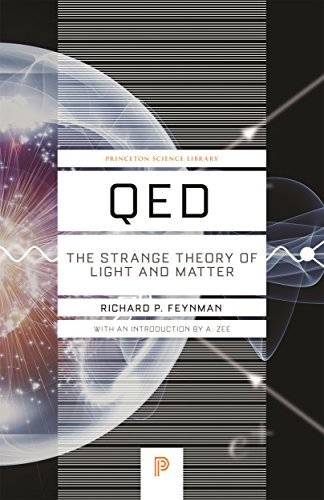
QED: The Strange Theory of Light and Matter
Richard P. Feynman
Princeton University Press
QED: The Strange Theory of Light and Matter
Skips the heavy math without talking down to the reader. Still the clearest popular book on quantum physics.
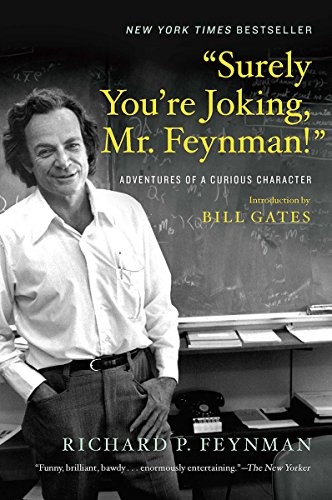
Surely You're Joking, Mr. Feynman!
Richard P. Feynman
W. W. Norton & Company
Surely You're Joking, Mr. Feynman!
One of the funniest science memoirs ever published, with zero physics prerequisites.